

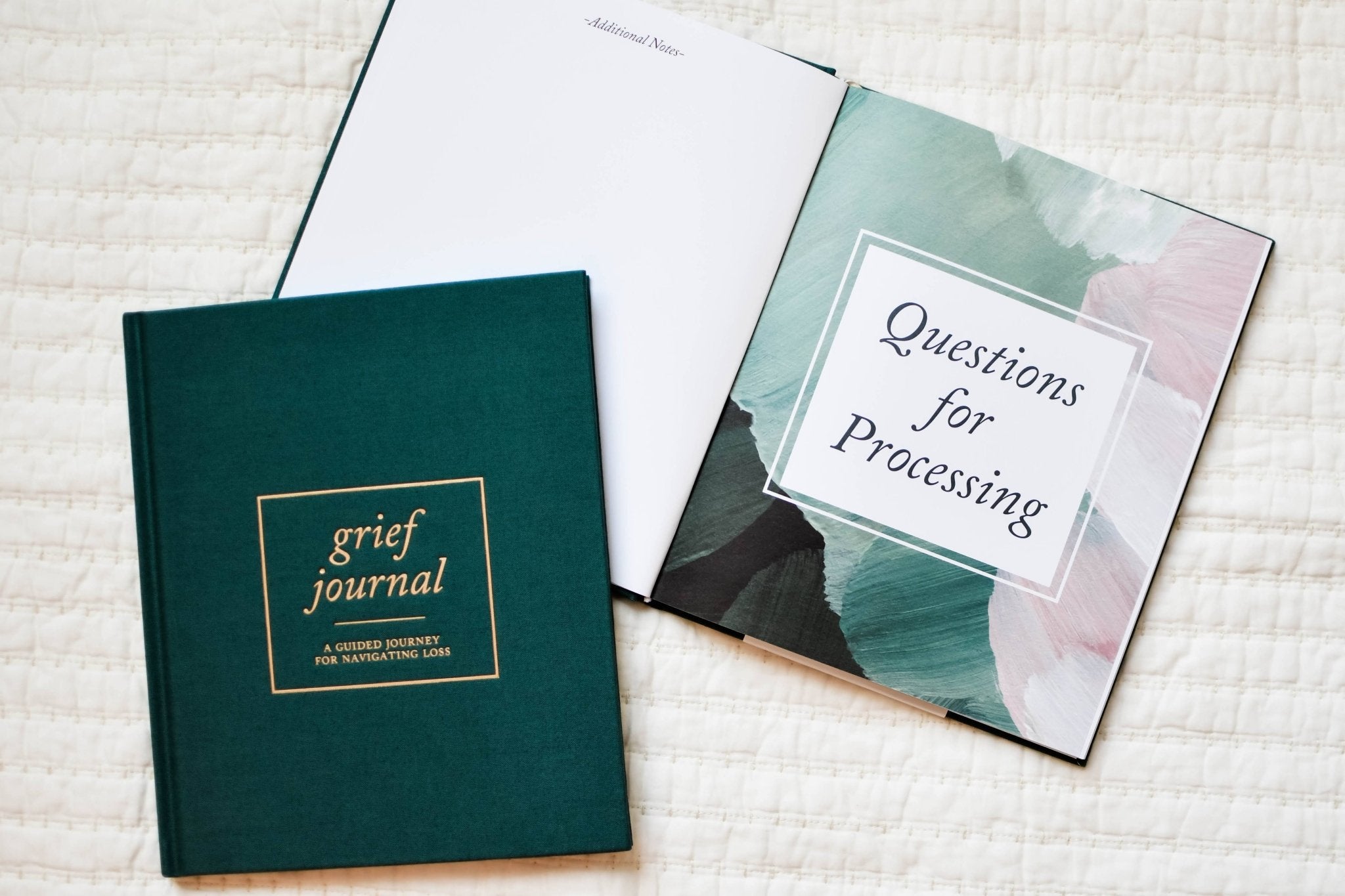
Grief is a journey without a map. When you lose someone you love, the world can suddenly feel quiet, heavy, and disorganized. The emotions that follow—sadness, anger, confusion, and even a strange sense of numbness—often come in waves, sometimes all at once. In these moments, finding a way to externalize your thoughts can be an essential part of the healing process.
At Duncan & Stone, we believe in the power of handwritten storytelling, not just for the mountain-top moments like weddings and births, but for the valleys as well. A grief journal is a quiet, private sanctuary where you can sit with your memories and process your loss at your own pace.
If you are navigating a season of loss, here is how a dedicated journal can provide comfort and clarity on the road to healing.
How Journaling Helps with Grief: The Science and the Soul
Journaling is a proven therapeutic tool. When we experience trauma or loss, our brains often struggle to make sense of the overwhelming flood of information. Writing by hand slows down our thought process. It takes the abstract, tangled emotions inside our heads and places them into a physical space where we can look at them, name them, and eventually, move through them.
Best journals for grief that provide comfort and clarity are those that don't pressure you to "move on." Instead, they offer a space to:
- Give Voice to the Unspoken: Sometimes there are things we wish we had said, or feelings that feel too heavy to share out loud with friends or family. The page never judges.
- Identify Patterns: Over time, you may look back and see that while the grief hasn't disappeared, you are growing around it.
- Preserve Memories: One of the greatest fears in grief is that we will forget the sound of a loved one's laugh or their specific quirks. Journaling acts as a warehouse for these precious details.
Healing Grief Journal Prompts to Help You Process Loss
If the blank page feels intimidating, you are not alone. Many people find that "guided" journaling is more effective during early grief because it removes the burden of having to decide what to say. Here are some healing grief journal prompts to help you process loss:
- The "I Remember" List: Write down five small things about your loved one that made them unique. Was it the way they took their coffee? A specific phrase they always used?
- Letter of Gratitude: Write a letter to them about one specific way they changed your life for the better.
- The Hard Days: Describe what you are feeling in this exact moment without trying to "fix" it. Is it a heavy weight in your chest? A fog in your mind? Naming it takes away some of its power.
- Unfinished Conversations: "If you were sitting across from me right now, I would tell you..."
Finding a Journal That Honors Your Journey
At Duncan & Stone, our Grief Journal is designed with a timeless, intentional aesthetic. We believe that a book holding such sacred thoughts should be beautiful. With a linen cover and high-quality paper, it is built to be a keepsake that honors the person you lost, serving as a physical testament to the love you carry for them.
Frequently Asked Questions
What is a grief journal?
A grief journal is a specialized notebook or guided journal designed to help individuals navigate the emotional aftermath of losing a loved one. It often includes prompts and space for reflection to help the writer process their sorrow and preserve memories.
How does journaling help with grief?
Journaling provides a private outlet for intense emotions, helping to reduce stress and provide mental clarity. It allows you to organize your thoughts and can act as a "pressure relief valve" when the weight of loss feels overwhelming.
What should I write in a grief journal?
There are no rules. You can write letters to your loved one, recount favorite memories, vent about your frustrations, or simply track your "highs and lows" for the day. Our journal provides prompts to help you when you don't have the words.
When is the right time to start a grief journal?
There is no "right" or "wrong" time. Some find comfort in writing immediately after a loss, while others may wait months or even years to begin processing their experience. Listen to your heart—the journal will be there when you are ready.
Can a grief journal be shared with family members?
While most people treat their grief journal as a private document, some families choose to share specific entries or use the prompts to spark conversations about their loved one during holidays or anniversaries. It can be a powerful tool for collective healing.
A Space for Your Heart
Healing isn't about forgetting; it's about remembering with peace. Our Grief Journal is here to walk beside you, providing a beautiful, quiet space to honor your loved one and find your way forward, one word at a time.
Share:
What to Write in an Engagement Journal: Tips for Capturing Your Love Story
Why a Life Story Journal Is the Perfect Gift for Mom