

At Duncan & Stone Paper Co., our mission is to connect generations by preserving the life experiences of each person through simple, guided prompts. We believe in a world that often chases the momentary, but the most significant treasures we possess are the stories of those who came before us. As a company founded by two moms, Sarah and Stephanie, we understand that capturing family history shouldn't be "too cheesy" or "too time-intensive"—it should be a beautiful, intentional act of handwritten storytelling.
A Legacy Journal is a dedicated vessel for this mission. It is more than just a notebook; it is a bridge between the past and the future, ensuring that the wisdom, struggles, and joys of your ancestors are never lost to time.
Generational Memory Journals: Keeping Stories Alive
Family history is often told in fragments—a story shared over a holiday meal or a caption on the back of a fading photograph. However, without a central place to store these memories, they risk being forgotten. Generational memory journals act as a permanent anchor for your family's narrative.
By documenting life experiences, you are providing your descendants with a sense of identity and belonging. Research into family history often reveals that children who know more about their family’s past show higher levels of emotional resilience. A journal allows you to pass down not just names and dates, but the "why" behind your family’s journey—the values that guided them and the humor that sustained them.
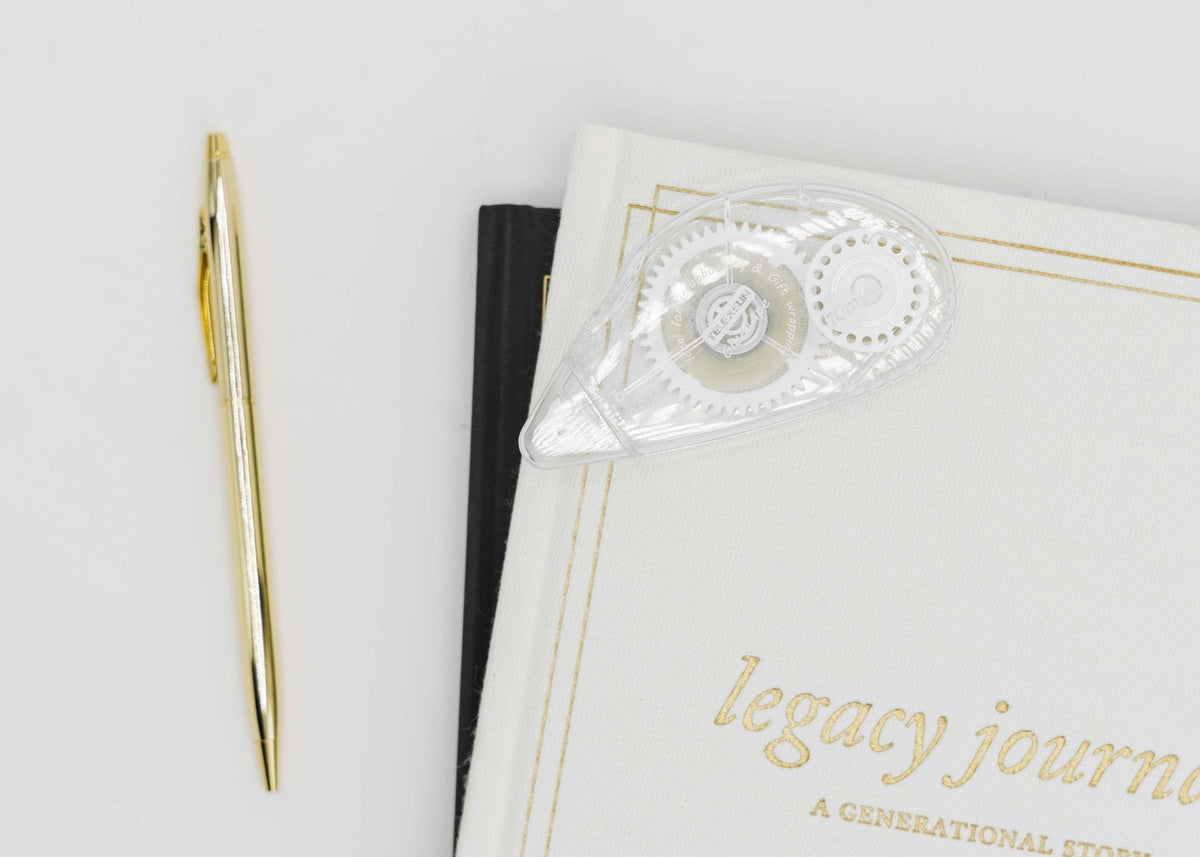
Our Legacy Journal is a "Hero Item" specifically designed for this purpose, featuring a timeless charcoal or ivory linen cover that looks elegant in any home library.
How to Create a Legacy Book from Grandparents to Grandkids
The transition of stories from a grandparent to a grandchild is a sacred exchange. To make this process effortless and meaningful, follow these steps:
1. Focus on the "Hero" Moments
Encourage grandparents to write about the defining moments of their lives. Our journals use simple, guided prompts to remove the "blank page" anxiety. Instead of asking for a full autobiography, we ask questions like:
- "What was the most adventurous thing you did as a young adult?"
- "What did your childhood home smell like during the holidays?"
- "What is a piece of advice you wish you had received at age 20?"
2. Pair Stories with Photos
A legacy book is a hybrid of words and images. Leave space to tuck in a photo of a grandparent at the age they are describing in a particular entry. This visual connection makes the storytelling much more impactful for a young grandchild.
3. Capture the Voice, Not Just the Facts
The beauty of handwritten storytelling is that it captures the personality of the writer. Don't worry about perfect grammar or formal prose. The way a grandfather uses a specific phrase or the way a grandmother’s cursive loops is part of the legacy itself.
4. Make it a Shared Activity
If a grandparent find writing difficult, a grandchild can act as the "scribe," asking the prompts from the journal and recording the answers. This turns the creation of the journal into a bonding experience that builds a stronger parent-child (and grandparent-child) connection.
Why Choose the Duncan & Stone Legacy Journal?
In 2024, our Legacy Journal accounted for 16% of our total business volume, with 23,519 units sold. It is one of our "Hero Items" because it balances timeless design with practicality.
- High-Quality Materials: Linen-bound covers and gold-embossed titles ensure durability for generations.
- Classic Color Palette: Available in sophisticated tones like Charcoal and Ivory to suit any aesthetic.
- Effortless Journaling: Specifically designed to be "easy to use" so the project actually gets finished.
FAQs
1. What is a legacy journal?
It is a keepsake book designed to record a person’s life history, values, and experiences to be passed down to future generations.
2. Why should I create a legacy journal?
To preserve your unique story and ensure your family's heritage is documented in your own voice rather than lost to time.
3. Who should write a legacy journal?
While often written by grandparents, anyone at any stage of life can begin documenting their journey for their children and grandchildren.
4. What should I include in my legacy journal?
Childhood memories, career highlights, family traditions, lessons learned, and hopes for the future.
5. How do I get started?
Simply pick a prompt that resonates with you today. You don't have to write chronologically; start with the story that is clearest in your mind.
6. Are there prompts or templates I can use?
Yes, Duncan & Stone journals come pre-filled with simple, guided prompts to make the process effortless.
7. Should I handwrite or type my journal?
We strongly advocate for handwritten storytelling. There is an emotional connection to a loved one's handwriting that a typed font cannot replicate.
8. How do I organize the journal?
Our journals are organized by life stages and themes, but you can navigate them in whatever order feels natural to you.
9. Can I include contributions from other family members?
Absolutely. Having siblings or spouses add their perspective to a shared memory can create a rich, multi-dimensional family history.
10. How do I preserve and share the journal?
Store it in a cool, dry place. Because our journals are "classic" and "stylish," they are meant to be kept on a shelf where they can be easily reached and shared.
11. What if I’m not a good writer?
You don't need to be. Our prompts are designed for "non-writers." Your family wants your stories and your heart, not a literary masterpiece.
12. How often should I update my legacy journal?
There is no set schedule. Some prefer a weekly reflection, while others update it during holiday visits or family reunions.
Connect the generations of your family. Explore our Legacy Journal and begin preserving your story today.
Share:
12 Modern Engagement Journal Ideas for Stylish Memories
Tips for Documenting Your Grandparents’ Stories in a Memory Book