

Food is so much more than basic sustenance. It is a beautiful vehicle for memory, a sensory time machine that links generations together. Ask anyone about their childhood, and they can likely tell you about a specific dish that defined their family table: the rich, sweet aroma of Grandma’s Sunday morning cinnamon rolls, the exact smoky char of a father’s summer barbecue glaze, or the comforting, savory depth of a mother's holiday stuffing.
But as the years pass, these culinary legacies face a quiet threat. Recipes get scattered across torn pieces of scrap paper, tucked into random kitchen drawers, or left trapped on old, food-splattered index cards where the ink is beginning to fade. Sometimes, the most important cooking secrets are never written down at all—they live entirely in the intuition of a loved one who cooks by memory, adding "a pinch of this" and "a splash of that" until the flavor tastes just right. Without an intentional home for these culinary treasures, an incredibly vital part of your family’s history can easily be lost to time.
A physical recipe book changes that. By gathering your family’s unique food traditions into a dedicated family recipe journal or custom cookbook, you preserve your history in real life.
In this comprehensive guide, we will walk you through how to build an heirloom recipe book from scratch—creating a tangible, beautiful piece of your legacy that can be passed down to your children and grandchildren for decades to come.
Why Choose a Physical, Blank Recipe Book Over Digital Logs?
In our modern, high-tech kitchens, it is incredibly common to save cooking ideas across bookmarked browser links, smartphone screenshots, or shared digital notes folders. While digital logging is highly practical for discovering new weeknight meals, it lacks the profound emotional weight of a physical blank recipe book.
- The Soul of Real Handwriting: There is an irreplaceable magic in seeing a loved one’s authentic handwriting on a page. A typed digital screen is completely uniform; a handwritten note contains a person’s presence. Decades from now, seeing your mother’s unique script or your grandmother’s handwritten margins next to a baking instruction is what transforms a kitchen tool into a priceless family treasure.
- A True Sensory Artifact: A custom kitchen journal is built to live directly in the heart of the home. It is meant to be handled, propped up against a countertop, and stained over time by real drops of vanilla extract, dustings of flour, or splashes of marinara sauce. Those tiny kitchen imperfections aren't damage—they are the physical proof of a well-loved life.
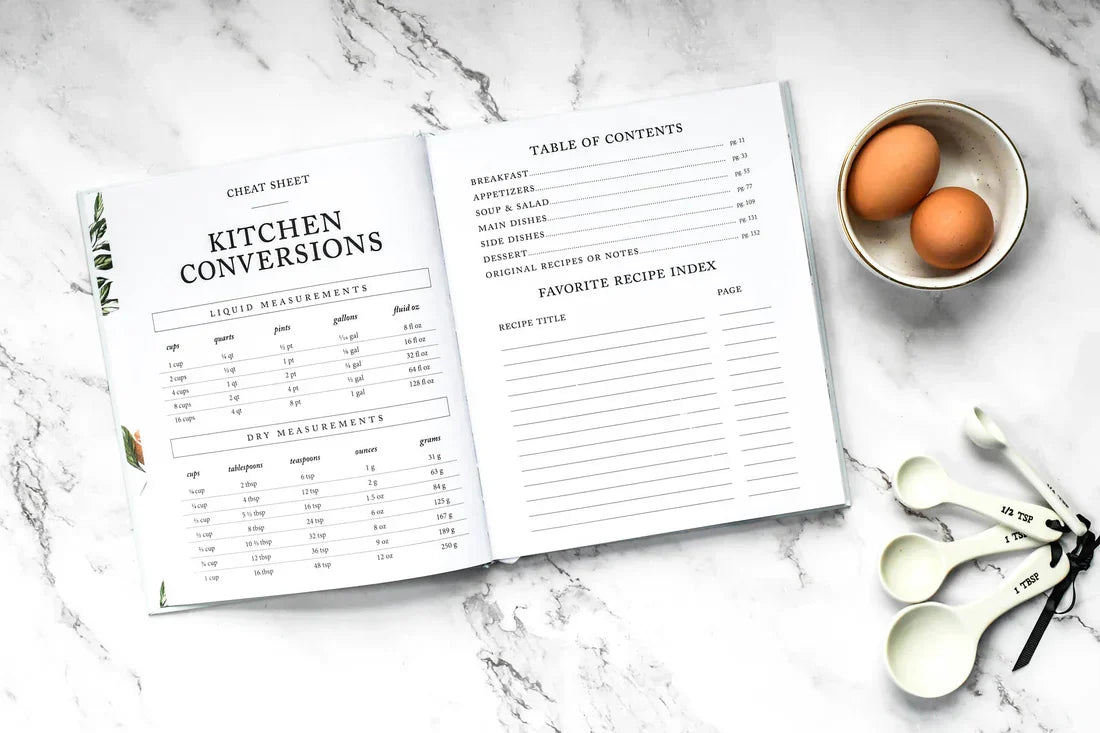
At Duncan & Stone, we designed our signature cloth-bound Recipe Journal to honor this exact philosophy. We moved away from bulky plastic kitchen binders and replaced them with a timeless linen design, high-quality thick pages, and clean, elegant layouts that give your family's favorite dishes a beautiful, cohesive home.
How to Collect and Curate Your Family Recipes
Starting a custom culinary archive can feel slightly intimidating if you have decades of unorganized index cards or missing measurements to sort through. Here is a stress-free framework to help you collect and edit your recipes seamlessly:
1. Host a Recipe Gathering Session
If your family members live nearby, invite them over for an afternoon of storytelling and food. Ask your parents or grandparents to bring their old kitchen notes, or interview them directly as they prepare a favorite dish. Record them on video or voice notes as they cook so you can capture those crucial unwritten tips, like exactly how long they knead dough or how they tell when a sauce is perfectly reduced.
2. Reach Out to Long-Distance Relatives
If your extended family is spread across different states, turn the collection process into a collaborative project. Send out a thoughtful text message or email to your aunts, uncles, and cousins: "I am building a custom family cookbook to preserve our heritage. What are 2–3 dishes that immediately remind you of childhood or family holidays? Please text me a photo of the recipe or write out the steps!"
3. Focus on the Stories, Not Just the Steps
A true heirloom journal shouldn't just contain list after list of raw ingredients and temperatures. The best custom cookbooks dedicate space to the narrative behind the meal. Next to the cooking steps, add a brief paragraph detailing who originally brought the dish to the family table, which specific holidays or birthdays it was always served on, or a funny story about a time the recipe went completely wrong.
Tips for Effortlessly Organizing Your Custom Cookbook
To ensure your personalized journal becomes a highly practical, frequently used tool in your kitchen, structure is incredibly important. Here is the best way to categorize your pages for maximum clarity:
- Categorize Lovingly: Group your recipes into 5 to 6 intuitive sections that match how your family actually eats. Classic categories like Appetizers, Main Dishes, Side Dishes, Soups & Salads, and Desserts are a spectacular baseline.
- Keep the Layout Cohesive: When writing into your blank book, try to maintain a uniform format for each entry. Write the total prep time, cook time, and exact oven temperatures clearly at the top of the page. List ingredients sequentially in the exact order they will be used in the instructions to avoid step-by-step confusion.
- Integrate Photos and Keepsakes: Don't hesitate to personalize your journal by gluing in printed photographs. Add pictures of your family gathered around a holiday table, a snapshot of your grandmother cooking in her elements, or a photo of the completed dish served on a favorite family platter.
Frequently Asked Questions
1. How do I create a personalized recipe book from scratch?
The easiest way to start is by selecting a high-quality, blank linen journal designed specifically for cooking. Begin by making a quick checklist of your family’s absolute top 10 "must-have" dishes. Transcribe those core recipes first to anchor your book, and then slowly add new family favorites or holiday traditions over time as you prepare them.
2. What sections should a recipe book have?
A highly functional recipe book typically features designated sections for Appetizers, Soups & Salads, Main Courses, Side Dishes, and Desserts. You can also customize your sections to feature highly unique family categories, such as "Holiday Traditions," "Sunday Brunch," or "Grandma's Baking Secrets."
3. Should I handwrite or type the recipes?
While typing and printing recipes can offer a clean look, handwriting your recipes is what transforms a standard cookbook into a deeply sentimental family heirloom. Seeing your real, unedited handwriting—or the distinct script of a parent or grandparent—gives the book an emotional presence that text fonts can never replicate.
4. How do I collect recipes from family members who live far away?
Utilize digital tools to gather the initial information. Ask far-away family members to snap a clear photo of their old kitchen cards and text them to you, or hop on a casual video call while they cook to talk through the steps together. Once you have the details, you can cleanly transcribe them into your physical book.
5. Can I include photos in a recipe book?
Yes! A premium recipe journal will feature thick, high-quality internal pages that can easily support the weight of printed photographs, old handwritten notes, or holiday menus without tearing or causing the ink on the opposite side to bleed through.
6. What's the best way to organize a family recipe book?
Organize your book primarily by meal category (such as main courses or desserts), and make sure to utilize an index at the front or back of the journal. Numbering your pages and cataloging the recipe names in an index allows you to flip directly to the exact page you need in the middle of a busy cooking session.
7. Is a personalized recipe book a good wedding or housewarming gift?
It is one of the most thoughtful, emotional gifts you can give. Gifting a newly married couple or a friend moving into a new home a beautiful linen book—especially if you take the time to fill in the first 5 to 10 pages with beloved family recipes to get them started—gives them a stunning foundation to build their own home traditions.
8. Where can I buy a blank recipe book to fill in?
You can discover our registry-favorite, heirloom-quality journals directly on the Duncan & Stone Recipe Collection Page. Crafted with wrapped linen covers, elegant flat-laying bindings, and clean internal prompt layouts, our books are beautifully engineered to help you protect and celebrate your family's favorite flavors with absolute ease.
Share:
Spring Wedding Keepsakes: Why Every Bride Needs a Vow Book and Engagement Journal
The Best Travel Journals for Every Adventurer: Capture Your Journey, One Page at a Time